
The 2026 List Industry Icons
Drylet
Drylet Named a 2026 Industry Icon in Manufacturing & Industrial Innovation
Recognized for developing microbial technology that improves wastewater treatment performance, reduces energy consumption, and helps municipalities and industries manage biosolids more sustainably.
www.drylet.com/Recognized for using biocatalysis and microbiology to help wastewater and waste-to-energy facilities reduce sludge, improve treatment capacity, lower operating costs, and extract more value from infrastructure they already have.
Drylet has been selected as a 2026 Industry Icon in Manufacturing & Industrial Innovation by The 2026 List, brought to you by Industry & Influence, recognizing the company’s applied biotechnology, measurable wastewater outcomes, sustainability impact, and ability to improve industrial systems without requiring major new capital projects.
Wastewater treatment is one of the most important systems most people never see.
Every community depends on it.
Facilities have to manage organic load, sludge, chemicals, energy, odors, capacity, and regulatory compliance continuously.
Drylet approaches those challenges through biology.
Biocatalysis Instead of Bigger Infrastructure
Drylet develops bioremediation products that enhance microbial activity inside wastewater and waste-processing systems.
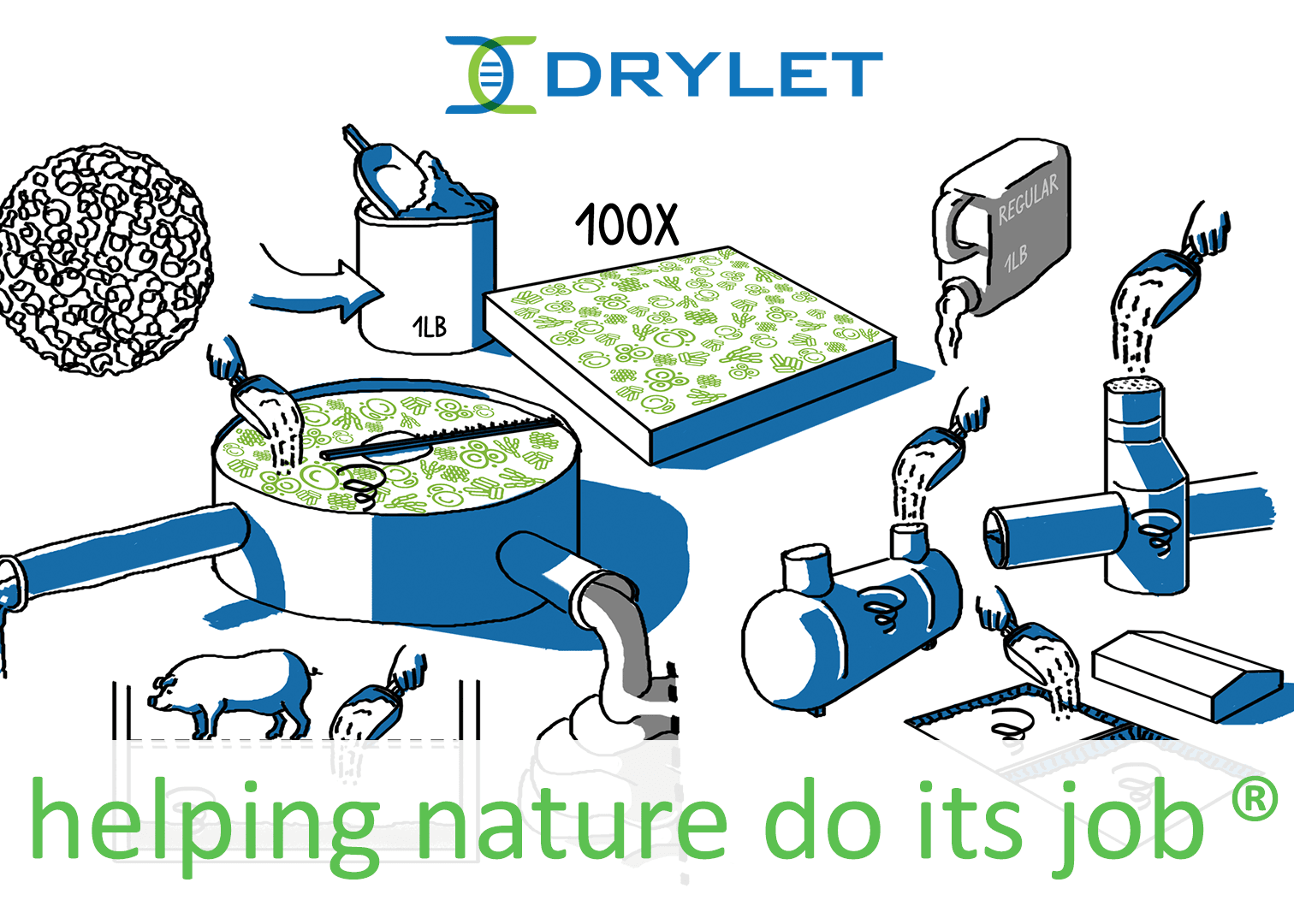
Its best-known product, Aqua Assist, uses non-pathogenic microorganisms embedded in engineered porous media.
The product is added directly into existing treatment systems and is designed to improve biological processing without requiring a new plant or major equipment installation.
That distinction matters.
Many wastewater facilities are already operating near capacity.
Building new tanks, digesters, or clarifiers can require enormous capital and years of planning.
A biological process improvement can create capacity inside the footprint that already exists.
Reducing Sludge at the Source
Biosolids are one of wastewater treatment’s largest operating costs.
They have to be processed, dewatered, transported, and disposed of or reused.
Drylet’s technology is designed to accelerate the breakdown of organic solids before they become a downstream disposal problem.
Company case studies report significant reductions in dry solids, waste activated sludge, and associated hauling and chemical costs.
At one 5-million-gallon-per-day plant, Drylet reported a 41 percent reduction in dry solids and a 43 percent reduction in waste activated sludge after Aqua Assist was implemented.
At another 4-MGD municipal utility district, the company reported biosolids reductions of roughly 25 to 33 percent alongside lower bleach and polymer use.
Those results illustrate the company’s core proposition: improve treatment by changing the biology rather than adding more mechanical infrastructure.
Biology Can Also Increase Energy Production
Drylet’s technology extends beyond sludge reduction.
Its BioReact products are designed for anaerobic digesters, where microbial processes convert organic material into biogas.
The company says its systems can increase biogas production, improving the economics of waste-to-energy operations.
That is particularly important as wastewater plants, farms, and food-processing operations look for ways to recover more value from organic waste.
Waste stops being only something to remove.
It can become a source of renewable energy.
Operational Resilience Matters as Much as Sustainability
Environmental technology often gets discussed through emissions and sustainability.
Wastewater operators also need reliability.
A treatment plant has to remain in compliance during equipment failures, weather events, seasonal loads, and unexpected process changes.
Drylet’s case studies include examples where enhanced microbial activity improved settling, process stability, and resilience.
In one Texas case, Aqua Assist was used after aeration equipment failed and helped revive microbial activity within a day, allowing the plant to remain operational until mechanical repairs were completed.
That is a different kind of sustainability.
It is the ability of critical infrastructure to keep functioning.
No-CAPEX Improvement Changes the Business Case
One of Drylet’s strongest commercial advantages is that its products are designed to work within existing systems.
A facility does not necessarily need to stop operations, build new tanks, or replace core equipment.
That makes the technology easier to evaluate against operating savings.
Lower sludge hauling, reduced chemicals, additional treatment capacity, improved energy output, and better compliance can all be measured against product cost.
For public utilities especially, that can make innovation easier to justify.
The question becomes less about buying a new technology platform and more about improving the economics of the plant already in service.
Why Drylet is a 2026 Industry Icon
The 2026 Industry Icon designation recognizes organizations demonstrating meaningful innovation, leadership, momentum, industry impact, and the ability to influence what comes next within their respective fields.
Drylet was selected for applying biotechnology to infrastructure problems that are often approached primarily through mechanical expansion.
Its Aqua Assist, BioReact, and related products demonstrate how microbial engineering can reduce sludge, increase capacity, support compliance, improve resilience, and enhance renewable-energy production.
For its environmental impact, measurable operating results, industrial biotechnology, and ability to help critical treatment systems perform better without major capital expansion, Drylet has been selected as a 2026 Industry Icon in Manufacturing & Industrial Innovation.
Explore Drylet
Explore all 100 Industry Icons
View All Honorees